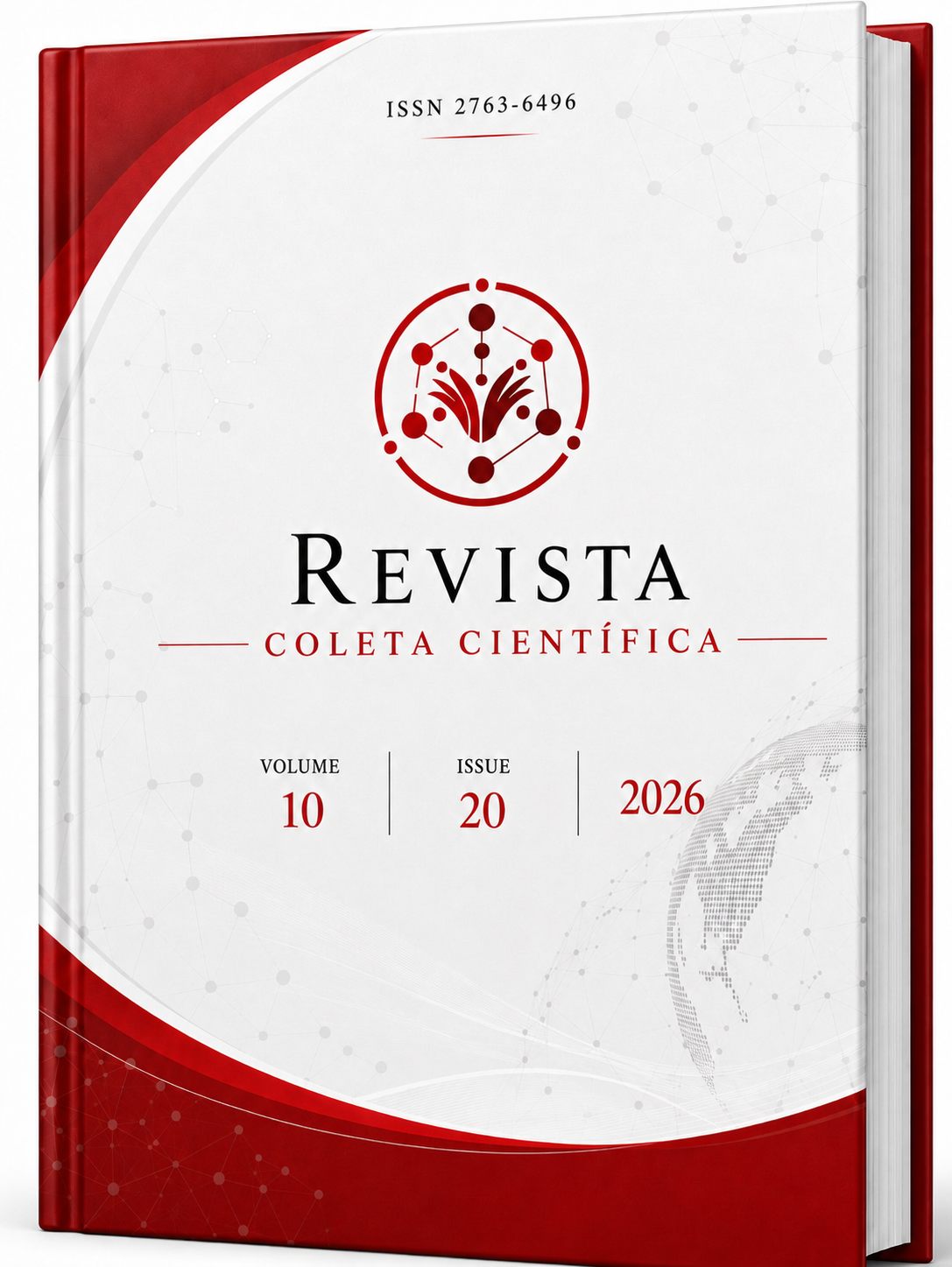
From Law to Practice: Quantitative Evidence on Educators’ Preparedness for School Emergencies and Implementation Scenarios for the Lucas Law: Secondary Analysis of Aggregated Public Data and Training Scenario Modeling
DOI:
https://doi.org/10.5281/zenodo.22776527
Keywords:
first aid, school health, teacher education, Lucas Law, open data, partial identificationAbstract
Objective: To examine learning, retention, and willingness indicators for school emergencies using public aggregate data to inform Brazil’s Lucas Law. Methods: Quantitative documentary research combined secondary analysis and deterministic modeling. Seven international studies published between 2014 and 2026 were purposively selected; four supplied the core analytical data. Calculations included percentage-of-maximum scores, preservation of initial knowledge gains, intersection bounds, and nine training-capacity scenarios. National planning used the rounded figure of 178,800 schools from the 2025 School Census release. Results: One longitudinal study reported an initial gain of 11.2 points on a 37-point scale. Aggregate means preserved 67.0%, 64.3%, and 50.0% of that gain at six, nine, and 48 months. A study published in 2026 reported knowledge, attitude, and self-reported practice means of 72.6%, 95.7%, and 77.6% of their scale maxima. Adequate knowledge and favorable attitude marginals from another study implied an intersection between 5.9% and 41.1%. Planning scenarios ranged from approximately 0.358 to 4.291 million annual training participations. Conclusion: The analysis supports multidimensional evaluation and transparent capacity planning, without estimating Brazilian educators’ competence or legal compliance. The methodological contribution is to quantify identification uncertainty and propose interoperable aggregate reporting.
References
Brasil. (2018, 4 de outubro). Lei nº 13.722, de 4 de outubro de 2018: Torna obrigatória a capacitação em noções básicas de primeiros socorros de professores e funcionários de estabelecimentos de ensino públicos e privados de educação básica e de estabelecimentos de recreação infantil. https://www.planalto.gov.br/ccivil_03/_ato2015-2018/2018/lei/l13722.htm
Instituto Nacional de Estudos e Pesquisas Educacionais Anísio Teixeira. (2026, 26 de fevereiro). Censo Escolar da Educação Básica 2025: Divulgação dos resultados [Apresentação]. https://download.inep.gov.br/censo_escolar/resultados/2025/apresentacao_coletiva.pdf
Instituto Nacional de Estudos e Pesquisas Educacionais Anísio Teixeira. (2026, 30 de julho). Sinopses estatísticas da educação básica. https://www.gov.br/inep/pt-br/acesso-a-informacao/dados-abertos/sinopses-estatisticas/educacao-basica
Conselho Nacional de Saúde. (2016, 7 de abril). Resolução nº 510, de 7 de abril de 2016: Normas aplicáveis a pesquisas em Ciências Humanas e Sociais. https://www.gov.br/conselho-nacional-de-saude/pt-br/atos-normativos/resolucoes/2016/resolucao-no-510.pdf
Brasil. (2025, 7 de outubro). Decreto nº 12.651, de 7 de outubro de 2025: Regulamenta a Lei nº 14.874, de 28 de maio de 2024, e dispõe sobre o Sistema Nacional de Ética em Pesquisa com Seres Humanos. https://www.planalto.gov.br/ccivil_03/_ato2023-2026/2025/decreto/d12651.htm
Li, F., Sheng, X., Zhang, J., Jiang, F., & Shen, X. (2014). Effects of pediatric first aid training on preschool teachers: A longitudinal cohort study in China. BMC Pediatrics, 14, 209. https://doi.org/10.1186/1471-2431-14-209
Li, F., Zhang, J. S., Sheng, X. Y., Wang, J. L., Shen, X. M., Xia, W. P., Shen, L. X., & Jiang, F. (2020). Effects of three different first-aid training methods on knowledge retention of caregivers and teachers: A randomized and longitudinal cohort study in China. Public Health, 178, 97–104. https://doi.org/10.1016/j.puhe.2019.08.021
Workneh, B. S., Mekonen, E. G., & Ali, M. S. (2021). Determinants of knowledge, attitude, and practice towards first aid among kindergarten and elementary school teachers in Gondar city, Northwest Ethiopia. BMC Emergency Medicine, 21(1), 73. https://doi.org/10.1186/s12873-021-00468-6
Alwidyan, M. T., Alkhatib, Z. I., Alrawashdeh, A., Oteir, A. O., Khasawneh, E. A., Alqudah, Z., Albataineh, S. A., & Abukheat, Y. (2023). Knowledge and willingness of schoolteachers in Jordan to perform CPR: A cross-sectional study. BMJ Open, 13(8), e073080. https://doi.org/10.1136/bmjopen-2023-073080
Zeng, Z., Shen, Y., Ma, Q., Deng, X., He, M., & Wan, L. (2026). Survey and analysis of kindergarten teachers’ knowledge, attitude, and practice (KAP) of unintentional injury prevention and first aid for children: A cross-sectional study in Mianyang, China. Medicine, 105(2), e46776. https://doi.org/10.1097/MD.0000000000046776
Abelairas-Gómez, C., Schroeder, D. C., Carballo-Fazanes, A., Böttiger, B. W., López-García, S., Martínez-Isasi, S., & Rodríguez-Núñez, A. (2021). KIDS SAVE LIVES in schools: Cross-sectional survey of schoolteachers. European Journal of Pediatrics, 180(7), 2213–2221. https://doi.org/10.1007/s00431-021-03971-x
Jorge-Soto, C., Abilleira-González, M., Otero-Agra, M., Barcala-Furelos, R., Abelairas-Gómez, C., Szarpak, Ł., & Rodríguez-Núñez, A. (2019). Schoolteachers as candidates to be basic life support trainers: A simulation trial. Cardiology Journal, 26(5), 536–542. https://doi.org/10.5603/CJ.a2018.0073
Nabecker, S., de Raad, T., Abelairas-Gomez, C., Breckwoldt, J., Chakroun-Walha, O., Farquharson, B., Hunyadi-Antičević, S., Lott, C., Schnaubelt, S., Yeung, J., Lockey, A., & Greif, R. (2025). European Resuscitation Council Guidelines 2025 education for resuscitation. Resuscitation, 215(Suppl. 1), 110739. https://doi.org/10.1016/j.resuscitation.2025.110739
Böttiger, B. W., Lockey, A., Georgiou, M., Greif, R., Monsieurs, K. G., Mpotos, N., Nikolaou, N., Nolan, J., Perkins, G., Semeraro, F., & Wingen, S. (2020). KIDS SAVE LIVES: ERC position statement on schoolteachers’ education and qualification in resuscitation. Resuscitation, 151, 87–90. https://doi.org/10.1016/j.resuscitation.2020.04.021
Michie, S., van Stralen, M. M., & West, R. (2011). The behaviour change wheel: A new method for characterising and designing behaviour change interventions. Implementation Science, 6, 42. https://doi.org/10.1186/1748-5908-6-42
Proctor, E., Silmere, H., Raghavan, R., Hovmand, P., Aarons, G., Bunger, A., Griffey, R., & Hensley, M. (2011). Outcomes for implementation research: Conceptual distinctions, measurement challenges, and research agenda. Administration and Policy in Mental Health and Mental Health Services Research, 38(2), 65–76. https://doi.org/10.1007/s10488-010-0319-7
Wilkinson, M. D., Dumontier, M., Aalbersberg, IJ. J., Appleton, G., Axton, M., Baak, A., Blomberg, N., Boiten, J.-W., da Silva Santos, L. B., Bourne, P. E., Bouwman, J., Brookes, A. J., Clark, T., Crosas, M., Dillo, I., Dumon, O., Edmunds, S., Evelo, C. T., Finkers, R., . . . Mons, B. (2016). The FAIR Guiding Principles for scientific data management and stewardship. Scientific Data, 3, 160018. https://doi.org/10.1038/sdata.2016.18
Downloads
Published
How to Cite
Issue
Section
ARK
License
Copyright (c) 2026 (CC BY 4.0)

This work is licensed under a Creative Commons Attribution 4.0 International License.